

Dr Ardalan Eghtedar
Principal Dentist and owner
GDC 250741 · BDS, University of Liverpool, 2014; MFDS RCS (Edin)
Runs the practice and treats patients himself, from check-ups and cracked teeth to cosmetic work: aligners, bonding and veneers.
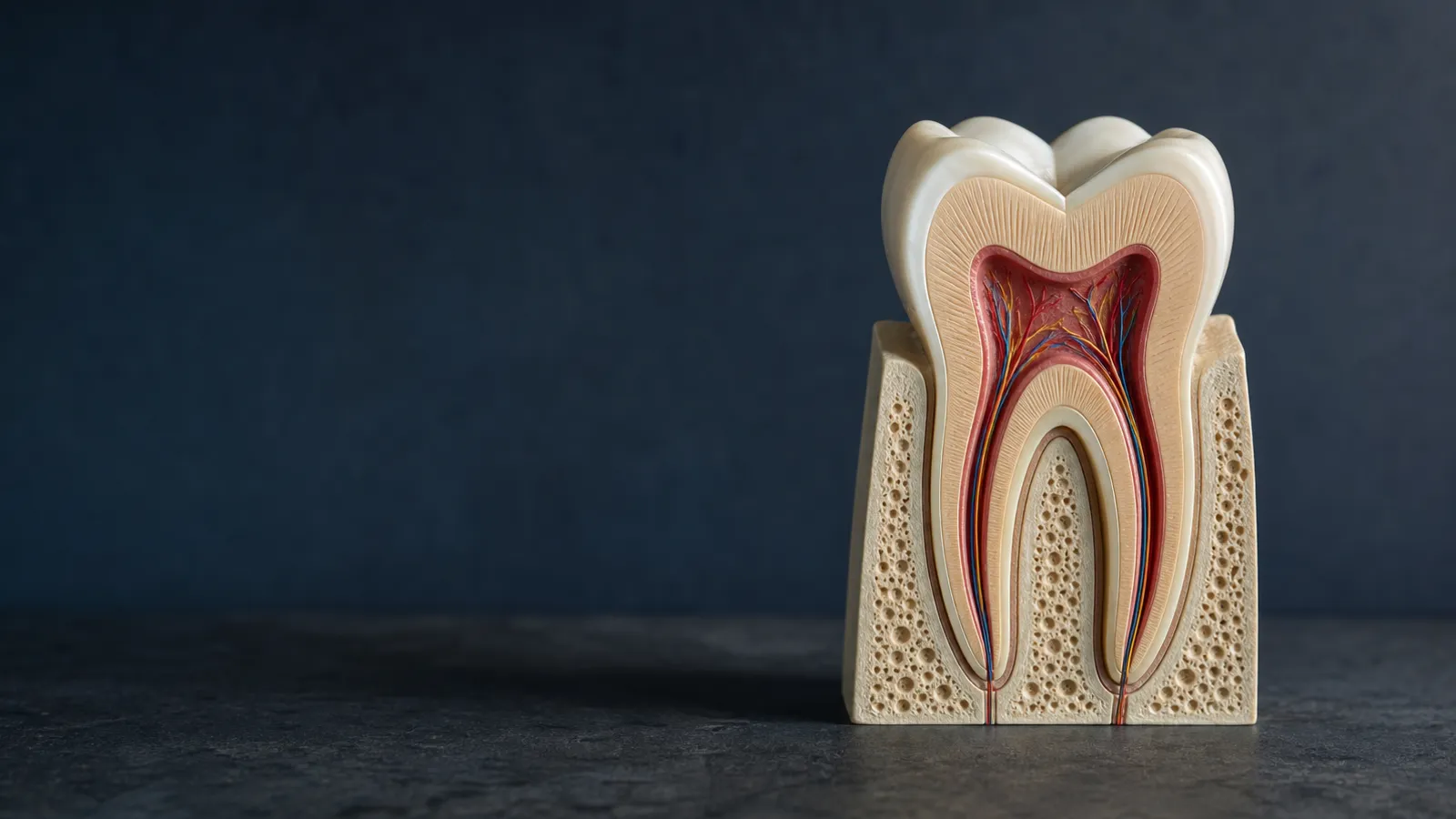
Root canal treatment in Notting Hill at Pembridge Dental saves a tooth whose nerve is infected or inflamed, so you can keep the tooth rather than have it taken out.
£600 to £1,100depending on the tooth · see the fee guide
Book an appointmentCarried out by Dr Ardalan Eghtedar, principal dentist (GDC 250741).
Saving teeth
Inside every tooth is a soft core of nerve and blood vessels, called the pulp, running down narrow channels in the root. When decay, a crack or a knock lets bacteria reach the pulp, it becomes inflamed or infected. That is what causes the deep, throbbing toothache that keeps people awake, and it can lead to an abscess at the root.
Root canal treatment removes the inflamed or infected pulp, cleans the canals inside the root, and seals them. The tooth stays in your mouth, held by its own root, and keeps working like any other tooth. The phrase sounds worse than the treatment: for most people it feels much like having a large filling.
When a tooth’s nerve is infected, there are two ways to fix it: save the tooth with a root canal, or take it out. Taking it out is quicker on the day, but it leaves a gap. A gap at the front is obvious, and a gap at the back lets neighbouring teeth drift and tilt. Filling it later with a dental implant, a bridge or a denture costs more than the root canal would have.
So if a tooth can be rebuilt, saving it is usually the better choice. If it is cracked below the gum or too broken down to hold a filling or crown, taking it out is the honest answer, and we will say so.
A root-treated tooth can give trouble years later, if new decay or a leaking filling lets bacteria back into the canals. Redoing the root filling, called re-treatment or re-root treatment, can sometimes save the tooth a second time. It is more complex than a first root canal, so we check the X-ray carefully and tell you how likely it is to work before you decide.
Dr Ardalan carries out most root canal treatment at the practice. When a tooth is especially complicated, for example with curved or blocked canals or a difficult re-treatment, we refer you to Dr Vida Adib, a registered specialist in endodontics (root canal treatment), GDC 66789.
Dr Adib holds BDS, MSc, MClinDent, MFDS RCS and MRD RCSEd qualifications. She completed her specialist training at the Eastman Dental Hospital, has taught at the Royal London Hospital and has served as a Consultant in Endodontics at King’s College Hospital. She is a member of the British Endodontic Society and the European Society of Endodontology. We explain the referral and what it involves before you decide.
If you have toothache now, book an emergency appointment. We find the cause, ease the pain, and explain whether the tooth needs a root canal and what it costs. If you are new to the practice, read what happens at your first visit.
We examine the tooth and take an X-ray to see the root and any infection, then explain whether the tooth can be saved and what it will cost.
Under local anaesthetic the inflamed or infected nerve is removed, and the narrow canals inside the root are cleaned and shaped.
The canals are filled and sealed so bacteria cannot get back in, and the tooth is closed with a filling. Some teeth need a second visit.
A root-treated back tooth is more likely to break, so we usually recommend a crown to protect it. We tell you at the start if you are likely to need one.
The tooth may be tender to bite on for a few days as the area settles. Over-the-counter painkillers usually help. The toothache that brought you in should ease.
A root-treated tooth that is well sealed and protected can last for many years. Most failures come from new decay, a leaking filling or the tooth cracking, which is why the crown matters.
Treat it like any other tooth: brush twice a day, clean between your teeth and keep up check-ups. Avoid chewing very hard food on it until the permanent filling or crown is in place.
Root canal treatment at Pembridge Dental is £600 to £1,100. Where in that range you fall depends on the tooth: a front tooth usually has a single canal, while a molar at the back can have three or four, which takes longer.
If a back tooth needs a crown afterwards to stop it breaking, that is £980 to £1,300, and we tell you at the start so there are no surprises. If you come in as an emergency in pain, the emergency appointment (£95 at the moment, usually £150) is where we find the cause.
Fees at Pembridge Dental
The root canal price depends on the tooth: front teeth usually have one canal, back teeth up to four. Dr Ardalan carries out most root canal treatment himself; for more complicated cases we refer you to a registered specialist in endodontics (root canal treatment). Private fees, confirmed in your written treatment plan before any treatment starts. See the full fee guide.
Principal Dentist and owner
GDC 250741 · BDS, University of Liverpool, 2014; MFDS RCS (Edin)
Runs the practice and treats patients himself, from check-ups and cracked teeth to cosmetic work: aligners, bonding and veneers.
Still have a question?
Call reception on 020 7727 3976, Monday to Friday. We are happy to talk it through before you book.
Root canal treatment at Pembridge Dental in Notting Hill is £600 to £1,100, depending on the tooth. Front teeth, with one canal, sit at the lower end; molars, with three or four, at the upper end. A back tooth often needs a crown afterwards (£980 to £1,300). Your written plan shows the full cost before we start.
A root canal is done with the tooth numbed, so most people feel pressure and vibration rather than pain, much like a large filling. The tooth can be tender to bite on for a few days afterwards. Often the treatment relieves the toothache that brought you in.
Most people go back to work or normal life the same day. The tooth may feel tender for a few days while the area settles, and normal painkillers usually help. Avoid chewing hard food on the tooth until the permanent filling or crown is fitted.
Keeping your own tooth with a root canal is usually better if the tooth can be rebuilt, because a gap then needs filling with an implant, bridge or denture, which costs more and takes longer. Taking the tooth out is the better choice when it is too broken down to restore. We show you the X-ray and explain both.
Root canal treatment can take more than one visit, the tooth can be tender for a few days, and a back tooth usually needs a crown afterwards, which adds cost. It does not always succeed, and a root-treated tooth can darken. We go through these before you decide.
An old root filling that has started to fail can sometimes be redone. This is called re-treatment: the old filling is removed, the canals are cleaned again and resealed. It is more complex than a first root canal. We check on an X-ray whether it is likely to work and explain the options.
Some root canals are finished in one visit, while others need two, especially if there is an infection that needs settling between visits. We tell you at the start how many visits to expect, and how long to allow for each.
New patients: what happens at your first visit Every price in one list
Book online, straight into our diary. Prefer to talk first? Call 020 7727 3976.
Book an appointment