

Dr Ardalan Eghtedar
Principal Dentist and owner
GDC 250741 · BDS, University of Liverpool, 2014; MFDS RCS (Edin)
Runs the practice and treats patients himself, from check-ups and cracked teeth to cosmetic work: aligners, bonding and veneers.
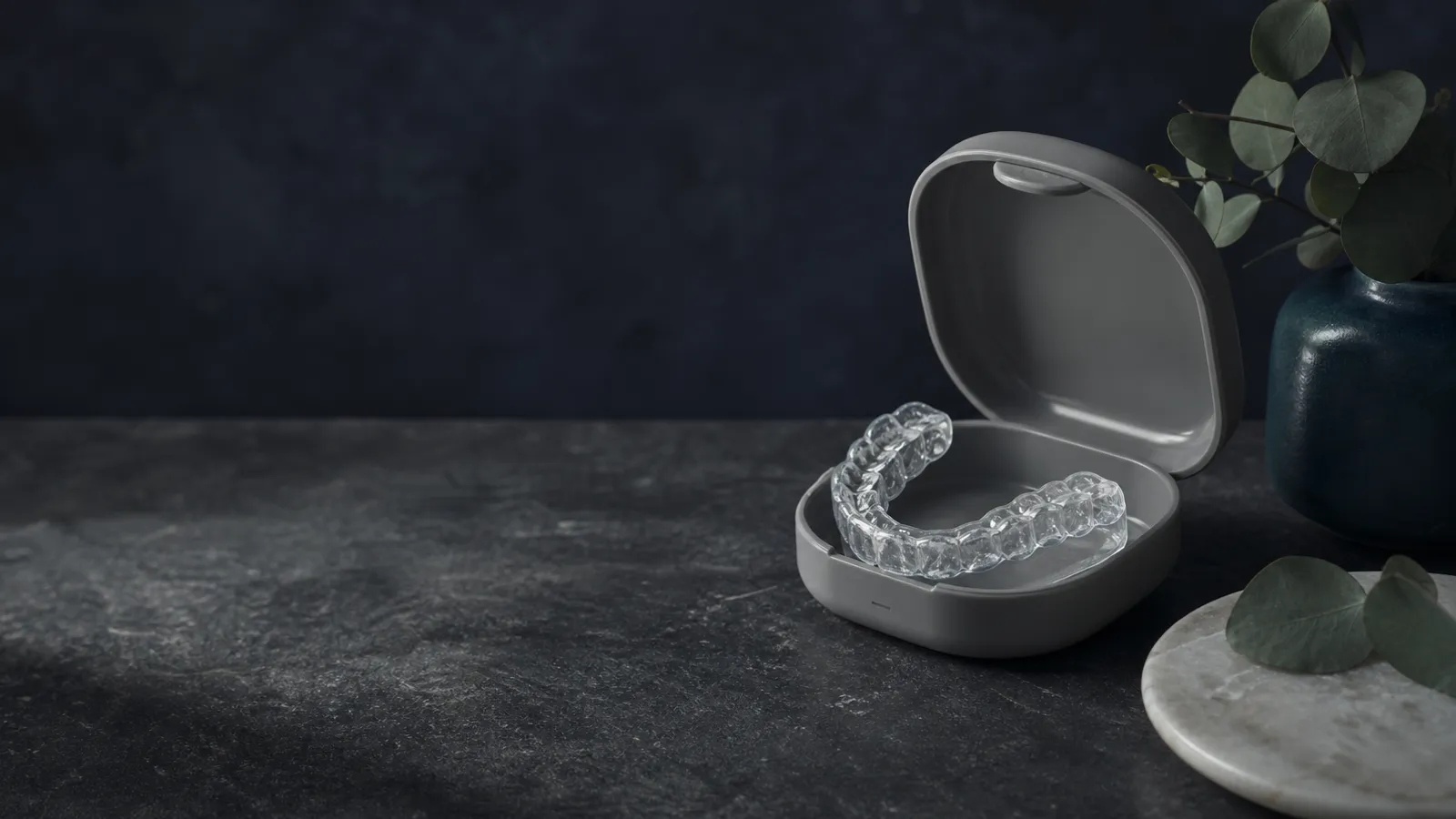
A night guard for teeth grinding from Pembridge Dental in Notting Hill is a thin, custom-made guard worn while you sleep, so your teeth grind against the guard instead of each other.
£350 · see the fee guide
Book an appointmentMade by our dentists with a dental laboratory.
Protecting your teeth
Grinding and clenching put far more force on your teeth than chewing does, and usually for hours at night without you knowing. Over months and years that force wears the biting edges flat, chips the corners of front teeth, cracks fillings and loosens crowns. It can also leave the jaw muscles aching and cause headaches around the temples when you wake.
Most of the time grinding is linked to stress, poor sleep, caffeine or alcohol, and it often comes and goes with how life is going. The wear it causes does not come back, so protecting your teeth while the habit is there is what matters.
A night guard is a thin, smooth cover for your upper or lower teeth, worn while you sleep. Ours are made by a dental laboratory from moulds or a scan of your own teeth, so the guard fits closely, stays in without you having to bite on it, and spreads the pressure evenly when your teeth meet.
That is the difference from a shop-bought guard. Boil-and-bite guards are designed for sport, so they are thick and soft. They can feel bulky, slip out at night and wear through, and some people find a soft guard makes them chew on it more.
If you have had cosmetic work, a guard protects that investment too. Grinding can chip composite bonding and porcelain veneers, and wear down crowns. We often suggest a night guard after this kind of treatment if we can see signs of grinding.
The wear on your teeth tells us a lot, so the first step is a check-up. We look at your teeth, jaw muscles and jaw joints, explain what we see, and tell you whether a guard is right for you before we make one. Every price is on our fee guide.
We look at the wear on your teeth, your jaw muscles and the joints in front of your ears, and ask about headaches, jaw pain and your sleep.
We take moulds or a digital scan of your teeth, and note how your teeth meet, so the guard fits your bite exactly.
When the guard comes back from the laboratory, we fit it, check it sits evenly against your teeth and adjust it until it feels right.
We check the guard and the wear on your teeth at your regular check-ups, and adjust or replace the guard when it needs it.
A night guard protects your teeth from the grinding. It does not always stop the habit itself, but it takes the wear and pressure off your teeth, crowns and fillings.
Most people take a few nights to get used to wearing a guard. A slight change in saliva or a feeling of fullness is common at first and usually settles.
Rinse and brush the guard gently each morning, keep it dry in its case during the day, and bring it to your check-ups so we can see how it is wearing.
Fees at Pembridge Dental
The night guard price includes making and fitting the guard. New patients have an exam first. Private fees, confirmed in your written treatment plan before any treatment starts. See the full fee guide.
Principal Dentist and owner
GDC 250741 · BDS, University of Liverpool, 2014; MFDS RCS (Edin)
Runs the practice and treats patients himself, from check-ups and cracked teeth to cosmetic work: aligners, bonding and veneers.
Still have a question?
Call reception on 020 7727 3976, Monday to Friday. We are happy to talk it through before you book.
A custom night guard for teeth grinding at Pembridge Dental is £350, including the moulds or scan, the laboratory work and fitting. New patients have an exam first (£120), so we can check the wear on your teeth and your jaw before we make it.
Teeth grinding often happens in your sleep, so many people do not know they do it. Signs include teeth that look flatter or chipped, an aching jaw or a headache on waking, sensitive teeth, and a partner hearing you grind. A dentist can often see the wear on your teeth at a check-up.
A custom night guard is made from moulds or a scan of your own teeth, so it is thinner, stays in place and spreads the pressure evenly across your bite. Shop-bought guards are softer and bulkier, can feel loose and can wear through quickly. Some people find soft guards make them chew and clench more.
A night guard does not always stop the grinding habit, but it protects your teeth from it. Your teeth grind against the guard instead of each other, so the wear, chips and cracks stop. Many people also find jaw aches and morning headaches ease once they wear a guard.
A custom night guard usually lasts a good while, but how long depends on how hard you grind. Heavy grinders wear guards faster. Bring your guard to your check-ups so we can see how it is wearing, and replace it before it wears through.
Bruxism is the medical name for grinding or clenching your teeth, usually during sleep but sometimes during the day. It is often linked to stress and poor sleep. Over time it can wear teeth down, crack fillings, and cause jaw and face pain. A night guard is the usual first treatment to protect your teeth.
New patients: what happens at your first visit Every price in one list
Book online, straight into our diary. Prefer to talk first? Call 020 7727 3976.
Book an appointment