

Dr Ardalan Eghtedar
Principal Dentist and owner
GDC 250741 · BDS, University of Liverpool, 2014; MFDS RCS (Edin)
Runs the practice and treats patients himself, from check-ups and cracked teeth to cosmetic work: aligners, bonding and veneers.
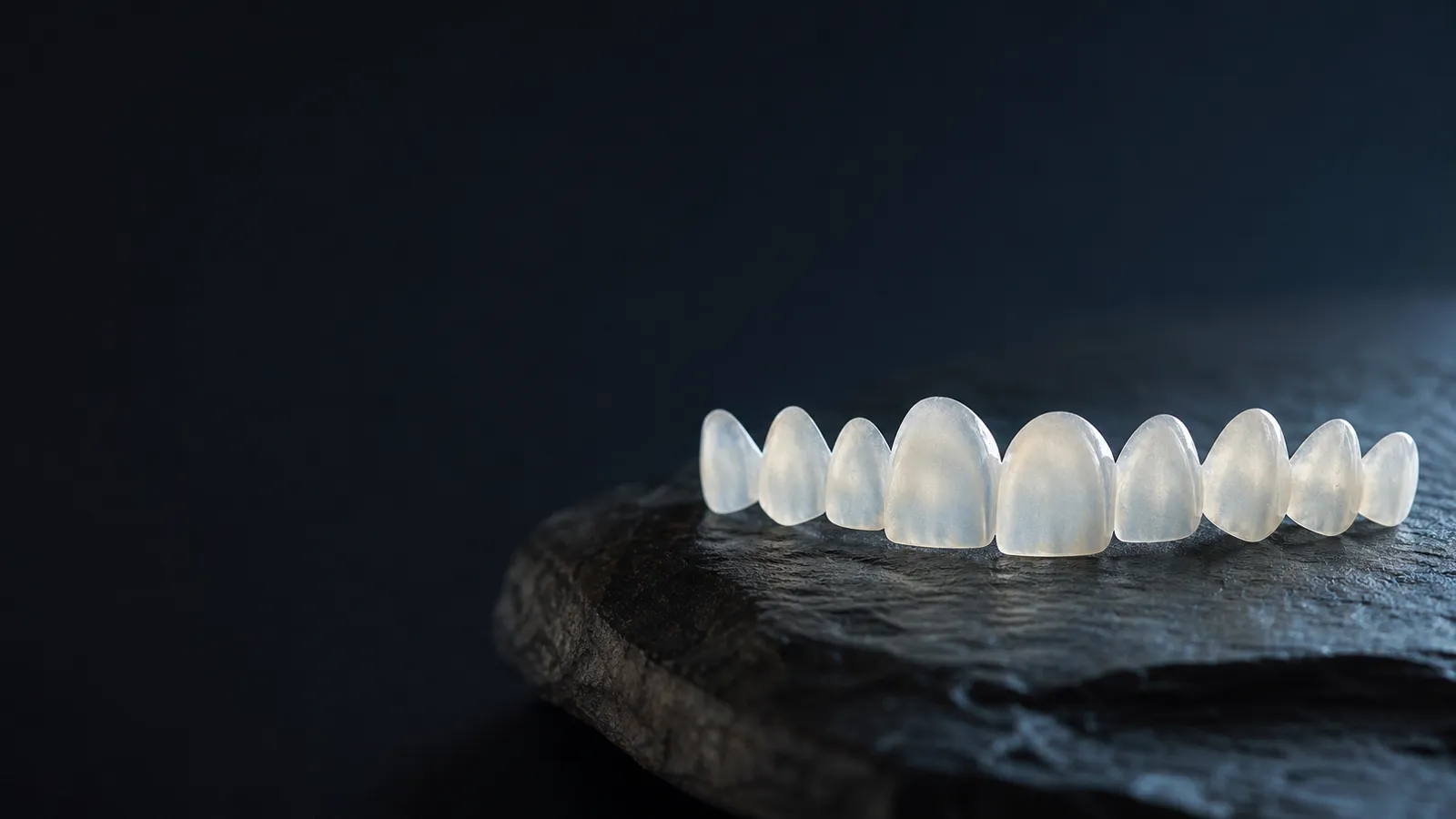
Veneers in Notting Hill at Pembridge Dental are thin composite or porcelain facings that change the colour and shape of front teeth, planned with you tooth by tooth.
£1,200per tooth · see the fee guide
Book an appointmentCarried out by Dr Ardalan Eghtedar, principal dentist (GDC 250741).
Cosmetic dentistry
A veneer is a thin facing fixed to the front of a tooth to change its colour, shape or length. There are two kinds. Composite veneers are made of tooth-coloured resin, built up and shaped directly on the tooth. Porcelain veneers, which we make in E.max ceramic, are made in a dental laboratory and bonded on at a later visit.
Veneers are a bigger step than composite bonding, which adds resin to fix small chips and gaps. They are often chosen when several front teeth need a more noticeable change.
Veneers can cover deep staining that whitening does not shift, rebuild worn or chipped edges, and even out the shape of front teeth. They cannot fix gum problems, and they are not a substitute for straightening very crooked teeth, where clear aligners first can give a better and gentler result.
Porcelain veneers need a thin layer of enamel removed, and that cannot be undone. That is why we talk it through carefully, show you what is planned, and tell you honestly when a smaller treatment would do.
Dr Ardalan explains the options before recommending anything, and you see the plan and the cost in writing before treatment starts. If you want whiter teeth overall, teeth whitening comes first so the veneers can match the new shade. New patients start with a check-up, and every price is on our fee guide.
We look at your teeth, bite and gums, talk about what you want to change, and explain whether composite or porcelain veneers suit you, or whether something simpler would do.
We agree the shape and shade with you. For porcelain veneers a thin layer of enamel is removed and impressions or scans are taken; composite veneers need little or no preparation.
Composite veneers are built up and shaped on the tooth. Porcelain veneers are made in a laboratory and bonded in place at a later visit. We check your bite and the look before you leave.
Veneers last for years with good care, but not forever. Composite can stain and chip and may need polishing or repair; porcelain is harder wearing but may eventually need replacing.
Brush twice a day, clean between your teeth, keep up hygiene visits, and avoid biting hard things like ice or pens. If you grind, a night guard helps protect them.
Composite keeps more of your own tooth and can be repaired. Porcelain resists staining better but needs some enamel removed, which cannot be undone.
Fees at Pembridge Dental
Veneers are priced per tooth, so the total depends on how many teeth you have done. Private fees, confirmed in your written treatment plan before any treatment starts. See the full fee guide.
Principal Dentist and owner
GDC 250741 · BDS, University of Liverpool, 2014; MFDS RCS (Edin)
Runs the practice and treats patients himself, from check-ups and cracked teeth to cosmetic work: aligners, bonding and veneers.
In patients' own words
"I had some composite veneers done here which required multiple appointments, and on the tail end the practice did everything they could on their end to deliver top-notch service and results. This was the first time I felt like a dentist worked like an artist."
Still have a question?
Call reception on 020 7727 3976, Monday to Friday. We are happy to talk it through before you book.
Porcelain (E.max) veneers at Pembridge Dental are £1,200 per tooth and composite veneers are £500 per tooth. Because they are priced per tooth, the total depends on how many teeth are treated. New patients have an exam first (£120), and you get a written plan with the full cost before any treatment starts.
Composite and porcelain veneers each have strengths. Composite keeps more of your natural tooth and can be repaired, but stains and chips more easily. Porcelain is harder wearing and resists staining, but needs some enamel removed. We explain which suits your teeth at the consultation.
Getting veneers is not usually painful. Porcelain veneers involve removing a thin layer of enamel, which is done with the tooth numbed. Composite veneers often need little or no preparation. Some sensitivity for a short time afterwards is common and usually settles.
Composite veneers can often be done in one visit, depending on how many teeth are treated. Porcelain veneers usually take at least two visits, because they are made in a laboratory between appointments. We tell you how many visits to expect in your plan.
Veneers last for years with good care, but they are not permanent. Composite veneers may need polishing or repairs over time; porcelain veneers are tougher but can eventually need replacing. Grinding, biting hard objects and poor cleaning all shorten their life.
Look after veneers as you would your own teeth: brush twice a day, clean between your teeth, and keep up regular hygiene visits. Avoid biting ice, pens or fingernails. If you grind your teeth, a night guard helps protect the veneers while you sleep.
New patients: what happens at your first visit Every price in one list
Book online, straight into our diary. Prefer to talk first? Call 020 7727 3976.
Book an appointment