How long do dental implants last? What decides it, and how to make yours last
Most dental implants are still in place 10 years on, but the crown on top usually needs attention sooner. Here is what the research shows, what shortens an implant's life and what helps it last.

The short version
- The implant itself, the titanium post in your jaw, usually lasts many years: in long-term studies about 95 in 100 are still in place after 10 years.
- The crown on top tends to need attention sooner. It can chip, wear or work loose, and may need repairing or replacing.
- Smoking and gum infection around the implant are the two biggest risks you can do something about.
- Cleaning around the implant every day, plus regular hygiene visits and check-ups, keeps the gum and bone around it healthy.
- Nobody can promise a fixed number of years. At a consultation we look at what affects yours.
On this page (9 sections)
- 01How long do dental implants last?
- 02Why does the crown usually need work before the implant?
- 03What makes a dental implant fail?
- 04Can you get gum disease around an implant?
- 05How should you look after a dental implant at home?
- 06How often should you see the hygienist with an implant?
- 07How long can dental implants last, compared with other options?
- 08How we plan implants at Pembridge Dental
- 09Thinking about an implant?
TL;DR
- The implant itself, the titanium post in your jaw, usually lasts many years: in long-term studies about 95 in 100 are still in place after 10 years.
- The crown on top tends to need attention sooner. It can chip, wear or work loose, and may need repairing or replacing.
- Smoking and gum infection around the implant are the two biggest risks you can do something about.
- Cleaning around the implant every day, plus regular hygiene visits and check-ups, keeps the gum and bone around it healthy.
- Nobody can promise a fixed number of years. At a consultation we look at what affects yours.
How long do dental implants last? For most people, many years. Research that follows implants for a decade finds the large majority still in place, and the crown on top is usually the part that needs work first. What happens to yours depends mostly on your gums, whether you smoke, how you bite and how well the implant is looked after.
This guide explains what the research shows, why the crown and the implant age differently, what shortens an implant’s life and what helps it last. It is general information, not advice about your own mouth.
How long do dental implants last?
Most dental implants are still in place 10 years after they are fitted, and many last longer, though no one can give you a fixed date.
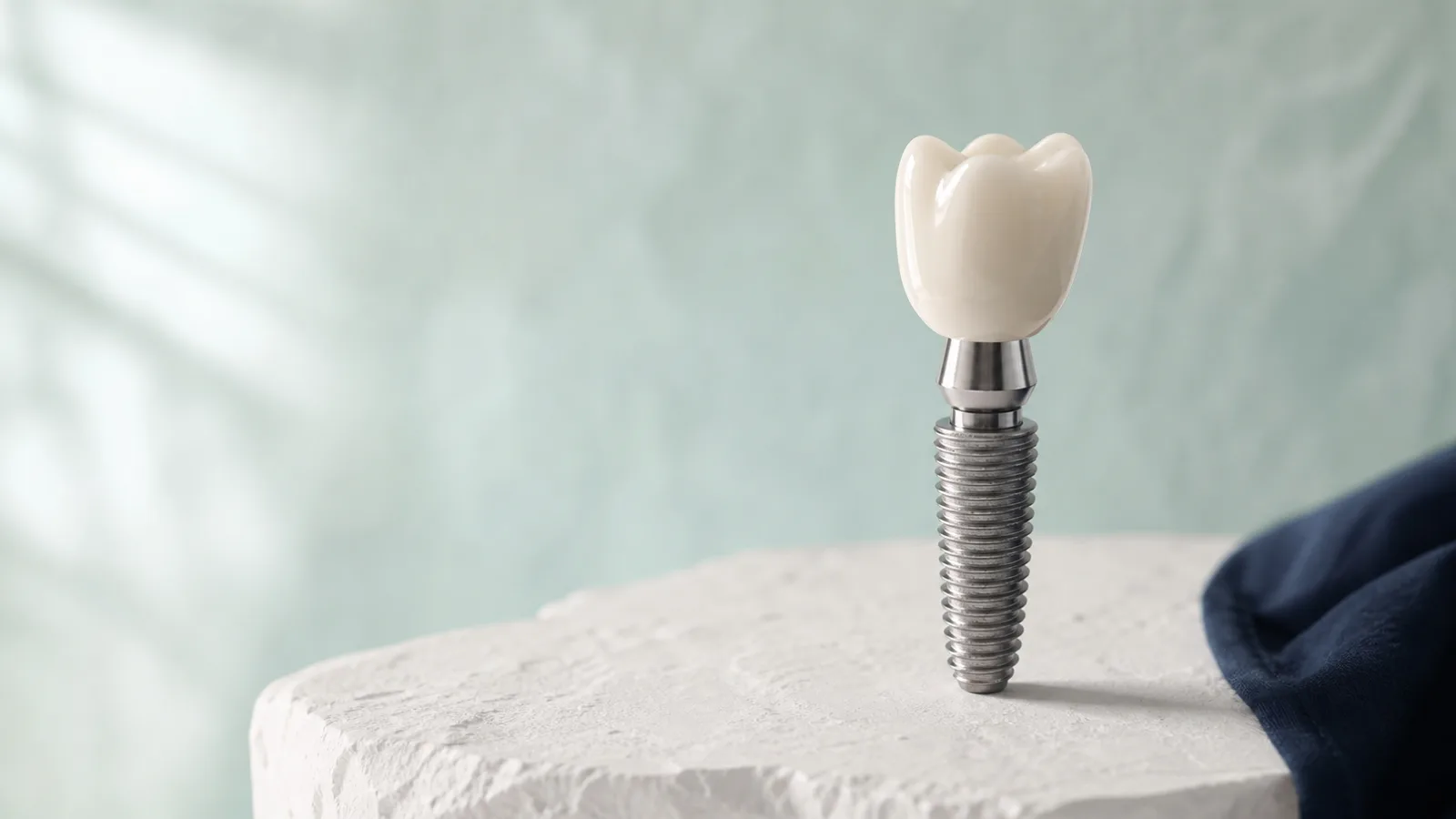
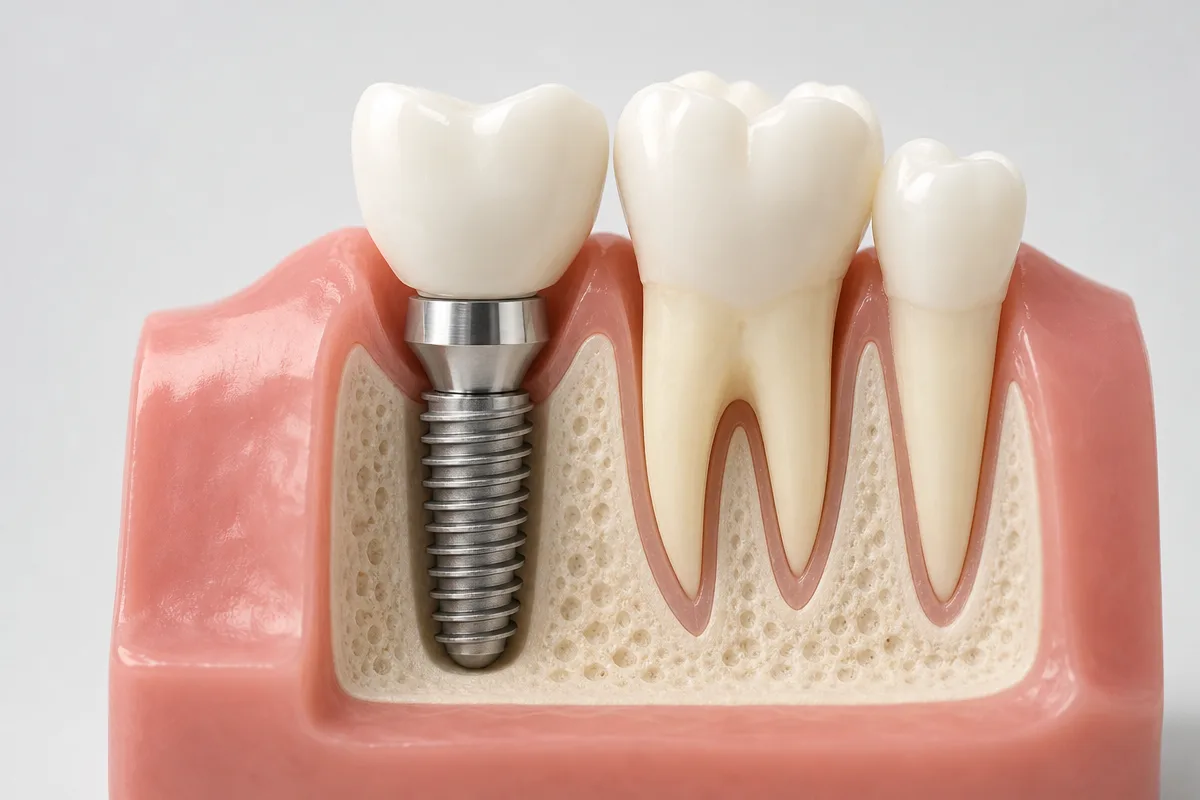
A dental implant is a small titanium post placed in the jawbone where a tooth used to be. Once it has healed and bonded with the bone, a crown (an artificial tooth) is fixed on top.
A 2019 review of long-term studies found that about 96 in 100 implants were still in place after 10 years. When the authors allowed for patients who dropped out of the studies, the estimate fell to about 93 in 100, and implants in people aged 65 and over did a little less well. An NHS hospital trust puts implant success at 80 to 95% over 15 years in people with healthy mouths, falling to 80 to 85% over seven years for people with gum disease.
Most studies stop at 10 to 15 years, so there is less evidence about what happens after that. The Oral Health Foundation’s wording is a fair summary: implants that are well cared for often last a very long time, but there is no promise of a lifetime.
Why does the crown usually need work before the implant?
The crown sits in your mouth and takes every bite, so it wears and can chip or loosen, while the implant is protected inside the bone.
A large review of single implant crowns followed them for at least five years. It found about 95 in 100 implants still in place at 10 years, but only about 89 in 100 crowns. Over five years, the screw holding the crown worked loose in about 9 in 100 cases, and the outer porcelain chipped in about 4 in 100. The authors concluded that implants last well, but that technical, gum and appearance problems were frequent.
| Part | What it is | What tends to happen over time |
|---|---|---|
| Implant | Titanium post in the jawbone | Usually stays in place for many years if the bone and gum around it stay healthy |
| Abutment and screw | The connector between implant and crown | Can work loose and need tightening |
| Crown | The visible artificial tooth | Can wear, chip or come loose, and may need repairing or replacing |
The NHS hospital leaflet says the same in plain terms: the teeth on implants wear over time and may need replacing. A replacement crown is a much smaller job than replacing the implant.
What makes a dental implant fail?
An implant can fail early, if it does not bond with the bone, or later, usually because infection or heavy forces wear away the bone around it.
The main things that raise the risk are:
- Smoking. In a review of more than 80,000 implants, about 6 in 100 failed in smokers, against about 3 in 100 in non-smokers. Smokers also had more infections after surgery and more bone loss around the implant.
- Gum infection around the implant. Plaque left around an implant can inflame the gum and, over time, destroy the bone that holds it. More on this below.
- Grinding and heavy biting. People who grind their teeth are at risk of overloading their implants, which can loosen crowns and screws.
- Untreated gum disease and some medical conditions. Gum problems are treated before an implant is placed, and some conditions and medicines affect healing, which is why your medical history is gone through in detail first.
Some of these you can change. If you smoke, the NHS quit smoking service offers free support, and it is worth talking to us about timing before implant treatment.
Can you get gum disease around an implant?
Yes: an implant cannot decay, but the gum and bone around it can become infected, much like gum disease around a natural tooth.
There are two stages. Peri-implant mucositis is inflammation of the gum around the implant, a bit like gingivitis around a tooth. Peri-implantitis is when the infection goes deeper and bone around the implant is lost. The Oral Health Foundation explains that it happens when plaque builds up around the implant.
Both are common. A review of the research estimated that around 43% of patients had mucositis and 22% had peri-implantitis, though the studies defined them in different ways. Peri-implantitis became more common the longer implants had been in place. That is why the cleaning around an implant matters more as the years go on, not less.
How should you look after a dental implant at home?
Clean around an implant as carefully as a natural tooth: brush twice a day and clean between your teeth every day.
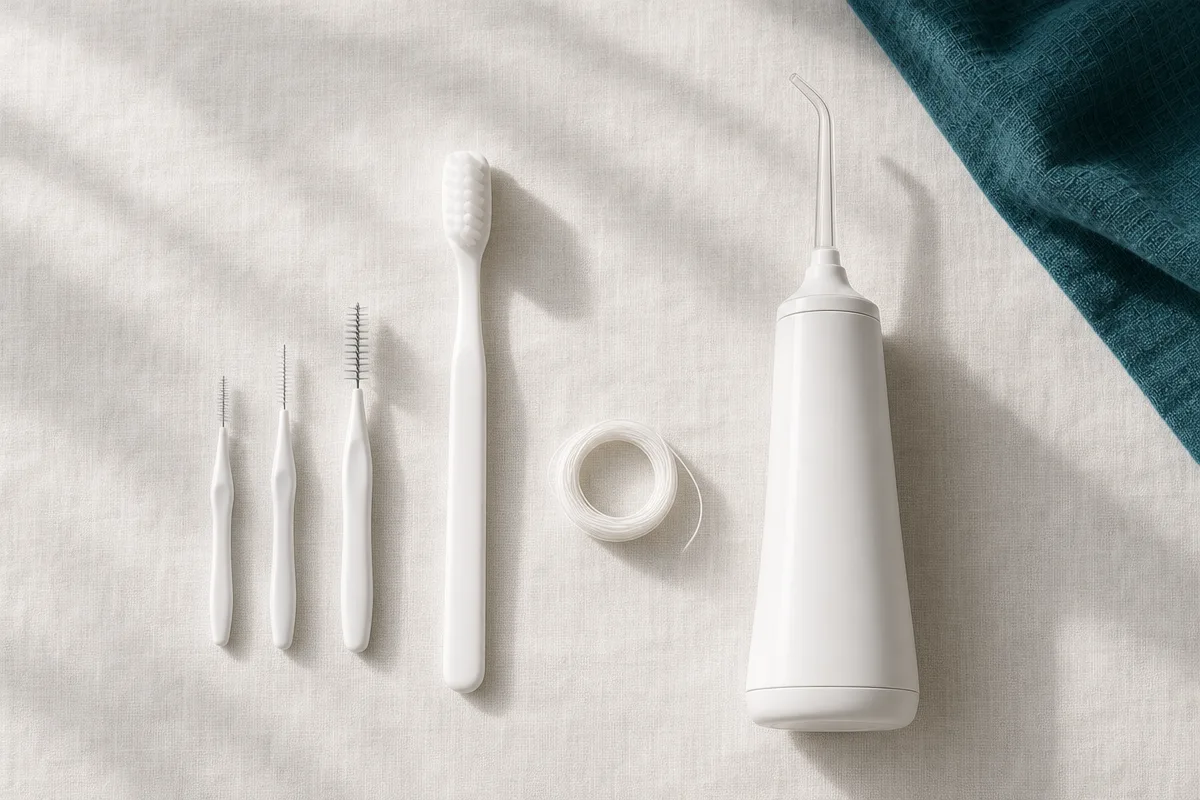
The NHS advice for natural teeth applies here too. Brush twice a day for about two minutes, with a fluoride toothpaste, and use interdental brushes or single-tufted brushes to reach the gaps a toothbrush misses. Around an implant, the place to focus on is where the crown meets the gum.
A few habits help an implant last:
- Use small interdental brushes around the implant every day. We show you which size fits.
- If you grind your teeth, ask about a night guard, which takes the force off crowns and implants while you sleep.
- Avoid using your teeth to open packets or bite very hard objects.
- Tell us early if the gum around an implant bleeds, feels sore, or the crown feels loose. Small problems are easier to put right.
How often should you see the hygienist with an implant?
Most people with implants need regular hygiene visits and check-ups for as long as they have the implant, at a gap set for their own gums.
One NHS implant service asks its patients to see their dentist or hygienist every three to six months over the long term. The right gap for you depends on your gums and how quickly plaque builds up, and we recommend one that suits you.
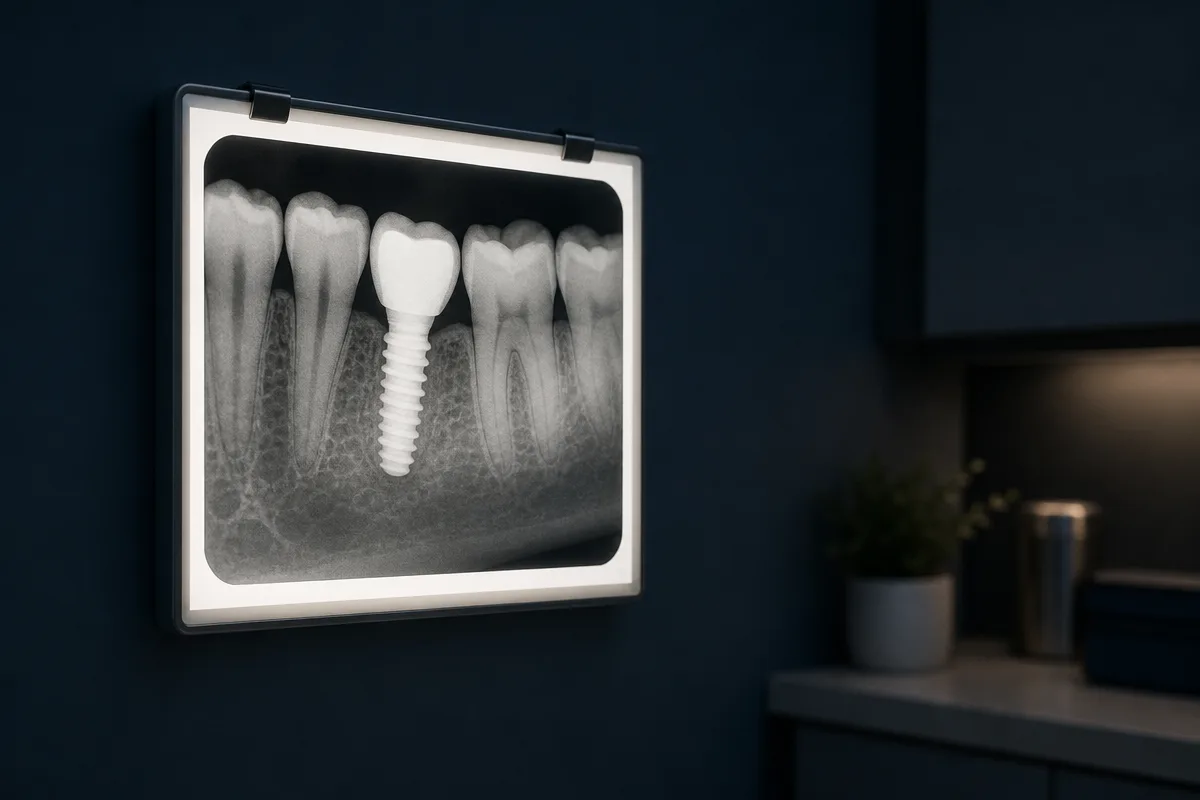
At Pembridge Dental, hygiene visits are with Dr Jeel Pandya, a qualified dentist (GDC 302850) who sees patients for hygiene appointments and Airflow cleans. An Airflow clean uses warm water, air and a fine powder and relies less on scraping, which suits dental work like implants. At check-ups we look at the gum around the implant and, when needed, take an X-ray to check the bone.
How long can dental implants last, compared with other options?
There is no single answer, because each option to replace a tooth wears in its own way and suits different mouths.
The three main ways to replace a missing tooth are an implant, a bridge and a denture. A bridge is held by the teeth either side of the gap, which usually need shaping to support it. A denture is removable and avoids surgery. An implant replaces the tooth without touching its neighbours, but takes longer and needs surgery. We explain the pros and cons of each for your mouth at a consultation, rather than ranking them in general.
How we plan implants at Pembridge Dental
Implants at Pembridge Dental are planned and placed by Dr Karthikeyan Ponnusami (GDC 267904), a visiting dentist with a special interest in implants. He holds a master’s degree in prosthodontics (the restoring and replacing of teeth) from King’s College London and has more than 20 years’ experience in implant and restorative dentistry.
Treatment starts with a consultation and X-rays or a scan to see the bone. We talk through whether an implant is right for you and what the alternatives are. You then get a written plan with every stage and its cost, including any bone grafting, before you decide. The implant is placed under local anaesthetic and left to heal, usually for several months, before the crown is made and fitted.
You can read more on our dental implants page, and the fee per implant is in our fee guide.
Thinking about an implant?
How long an implant lasts depends on your mouth, your health and the care it gets over the years. At a consultation we can tell you what applies to you, and what is not worth doing.
If you are new to the practice, see what happens at your first visit. To book an appointment, use the booking button below, or call the practice on 020 7727 3976. You will see the plan and the cost in writing before anything starts.
Questions
Common questions
How long does the crown on a dental implant last?
Implant crowns usually last many years, but they tend to need attention before the implant does. In a large review, about 89 in 100 implant crowns were still in place after 10 years, and some needed repairs along the way, such as a loose screw or a chip. How long yours lasts depends on your bite, grinding and how well it is cleaned.
Can you get gum disease around a dental implant?
Yes. Plaque around an implant can inflame the gum (peri-implant mucositis) and, if it goes further, cause bone loss around the implant (peri-implantitis). Both are common in research. Cleaning around the implant every day and keeping up hygiene visits and check-ups are the main ways to prevent them.
Can I have a dental implant if I smoke?
Smoking raises the chance of an implant failing, and heavy smoking may mean an implant is not the right choice for you. Some NHS implant services ask people to stop smoking months before treatment. We go through your smoking and medical history in detail before recommending an implant.
Does a dental implant feel like a natural tooth?
A healed implant with its crown is fixed in place, so you brush it and eat with it like a natural tooth. It does not come out like a denture. How long it lasts depends a great deal on how well it is cared for.
How long does implant treatment take?
Implant treatment usually takes several months from start to finish. The implant needs time to heal and bond with the bone before the crown is fitted, and bone grafting adds time if it is needed. Your written plan sets out each stage.
Who places dental implants at Pembridge Dental?
Implants at Pembridge Dental are planned and placed by Dr Karthikeyan Ponnusami, a visiting dentist with a special interest in implants, registered with the General Dental Council under number 267904. He works alongside Dr Ardalan Eghtedar, who leads the practice.
How much does a dental implant cost at Pembridge Dental?
The fee per implant, and the fee for a sinus lift if you need one, are published in our fee guide. Before you decide, you get a written treatment plan with every stage and its cost.
Sources
- Long-term (10-year) dental implant survival: a systematic review and sensitivity meta-analysis (Howe, Keys and Richards, 2019) , Journal of Dentistry
- Systematic review of the survival rate and the incidence of biological, technical, and aesthetic complications of single crowns on implants (Jung and others, 2012) , Clinical Oral Implants Research
- Peri-implant health and disease: a systematic review of current epidemiology (Derks and Tomasi, 2015) , Journal of Clinical Periodontology
- Smoking and dental implants: a systematic review and meta-analysis (Chrcanovic, Albrektsson and Wennerberg, 2015) , Journal of Dentistry
- Dental implants in restorative dentistry , Cambridge University Hospitals NHS Foundation Trust
- Understanding dental implants , Oral Health Foundation
- How to keep your teeth clean , NHS
- Quit smoking (Better Health) , NHS
Filed under: dental implants, longevity, aftercare
General information only, not a diagnosis. Every mouth is different: ask us at a consultation what suits you. More articles