How to stop receding gums: causes, prevention and treatment options
Receded gums do not grow back on their own, but you can often stop them getting worse. Here is what the NHS and dental bodies say about causes, brushing, hygiene visits and grafts.

The short version
- Gums that have receded do not grow back on their own, but you can often stop them getting worse. Cleveland Clinic says treatment can stop recession progressing.
- The usual causes are gum disease and brushing too firmly. Thin gum tissue, smoking and teeth moved by braces can also play a part.
- Brush gently with a soft or medium brush, clean between your teeth every day, and keep up check-ups and hygiene visits.
- A night guard protects teeth from grinding, but there is no good evidence that grinding alone makes gums recede.
- In some cases a gum graft can cover an exposed root. Results vary, and gum disease has to be treated first.
On this page (10 sections)
- 01What are receding gums?
- 02Why are my gums receding?
- 03Does brushing too hard cause receding gums?
- 04Can receding gums grow back?
- 05How do you stop receding gums getting worse?
- 06What does a hygiene visit do for receding gums?
- 07Will a night guard help receding gums?
- 08Can anything cover exposed roots or ease sensitivity?
- 09When should you see a dentist about your gums?
- 10Thinking about your gums?
TL;DR
- Gums that have receded do not grow back on their own, but you can often stop them getting worse. Cleveland Clinic says treatment can stop recession progressing.
- The usual causes are gum disease and brushing too firmly. Thin gum tissue, smoking and teeth moved by braces can also play a part.
- Brush gently with a soft or medium brush, clean between your teeth every day, and keep up check-ups and hygiene visits.
- A night guard protects teeth from grinding, but there is no good evidence that grinding alone makes gums recede.
- In some cases a gum graft can cover an exposed root. Results vary, and gum disease has to be treated first.
How do you stop receding gums? Start by finding out why they are receding. For most people the answer is treating gum disease, brushing more gently and cleaning between the teeth, because those steps remove the main causes.
This guide sets out what the NHS, dental bodies and the research say about causes, prevention and treatment. It is general information, not advice about your own gums, which only an exam can assess.
What are receding gums?
Receding gums, also called gum recession, is when the gum pulls back from a tooth and exposes the root underneath.
The British Society of Periodontology and Implant Dentistry says receding gums and gaps between teeth are very common and can be a real concern for some people. A review of 15 studies covering 37,460 people put the pooled figure at around 78% with some recession, though the authors rate the certainty of that evidence as very low, so treat it as a rough guide. Gum problems in general are widespread: in England’s 2023 survey, 93% of adults with natural teeth had calculus or signs of gum disease when examined.
Cleveland Clinic lists root exposure, meaning you see more of the tooth than you should, and sensitivity to heat, cold and sweet things as the main signs.
Why are my gums receding?
Gums recede for several reasons, and more than one can apply at once.
The British Society of Periodontology and Implant Dentistry lists four causes: gum disease, the shrinkage that follows successful treatment of gum disease, cleaning too firmly, and orthodontic braces. Cleveland Clinic adds other factors: thin gum tissue inherited from your parents, smoking or chewing tobacco, lip and tongue piercings, and poorly fitting restorations or dentures.
- Gum disease. The NHS says it is caused by a build-up of plaque, and that it can lead to gums shrinking and teeth becoming loose.
- Brushing too hard. More on this below, because the evidence is more mixed than you might expect.
- Thin gums. Some people are born with thinner gum tissue, which is easier to injure.
- Smoking. The NHS advises people with gum disease not to smoke.
It is common for a few of these to overlap. That is why a dentist looks at your gums, your brushing and your bite together.
Does brushing too hard cause receding gums?
It can contribute, but the research is not as clear as the advice you may have heard.
A review in the International Dental Journal found that the direct link between rough brushing and recession is inconclusive, and that long-term studies are lacking or do not support it. A more recent narrative review says that medium or hard brushes, abrasive toothpaste, heavy force and poor technique can cause wear at the neck of the tooth or recession.
So the sensible reading is that gentle brushing costs you nothing and may help. The NHS says medium or soft bristles are best for most people, and that electric and manual brushes are equally good if you clean every surface.
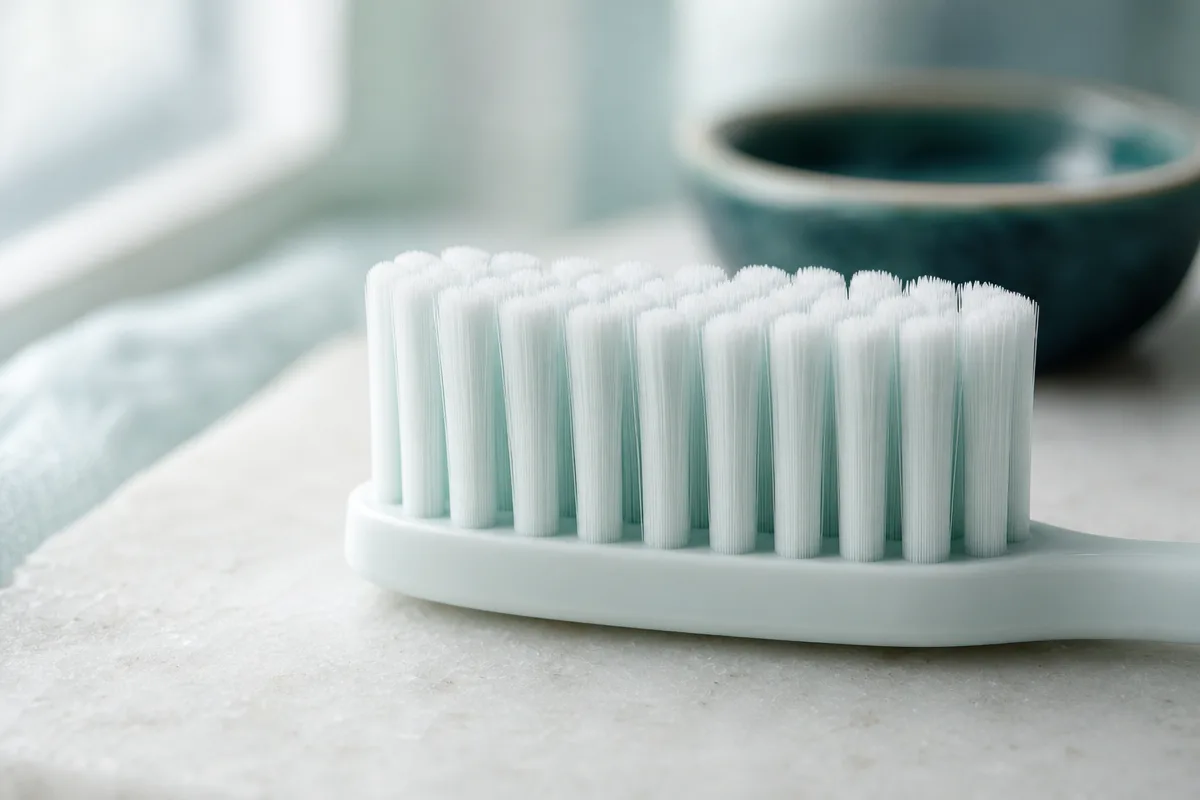
For technique, the British Society of Periodontology and Implant Dentistry suggests a small, soft-to-medium brush angled at 45 degrees to the gum, moved in small circles on one tooth at a time. Use a light touch rather than scrubbing.
Can receding gums grow back?
No, not on their own, so the aim is to stop recession getting worse.
Cleveland Clinic says receding gums cannot grow back or be reversed, but treatment can stop them getting worse. The exception is a gum graft, where tissue is taken from elsewhere in the mouth and used to cover the exposed root.
A Cochrane review of 48 trials with 1,227 adults found that most root coverage procedures reduced recession, but it could not say which technique was best, and most trials followed people for only 6 to 12 months. Gum disease must be treated before any grafting, the British Society of Periodontology says.
If a graft could help, the usual route is a referral to a periodontist, a dentist who focuses on gum surgery.
How do you stop receding gums getting worse?
You treat the cause and keep your gums clean, gently and every day.
- Treat gum disease. Bleeding, red or swollen gums need a check. The NHS says early treatment includes advice on interdental brushes, stopping smoking and a clean with a hygienist.
- Brush twice a day for about 2 minutes with fluoride toothpaste, and spit rather than rinse afterwards.
- Clean between your teeth every day. The NHS says to use floss or interdental brushes, and the brush should fit snugly between the teeth.
- Do not smoke. The NHS lists smoking among the things to avoid for gum health.
- Keep up your check-ups and hygiene visits. The gap depends on your gums, and we tell you what we recommend.
Doing all five does not mean recession will stop, because thin gums and tooth position are partly outside your control. It does remove the causes you can change.
What does a hygiene visit do for receding gums?
A hygiene visit removes the build-up that irritates your gums and shows you how to clean the places you are missing.
At Pembridge Dental, a hygiene visit starts with a gum check, then the build-up is cleaned from around and between your teeth, and we show you which brushes or interdental cleaners suit your mouth. A hygiene appointment is £130 per visit.
Some people need more than a single clean. If your gums need gum treatment over more than one appointment, we explain why first. It is £400 per arch, and the full list is in our fee guide.
Expect some changes as the gums heal. The British Society of Periodontology and Implant Dentistry says bleeding when you brush should settle within 7 to 10 days, and that you may notice the gums change shape as the swelling goes down. That can change how the gums sit around a tooth, which is healing rather than new damage.
Will a night guard help receding gums?
A night guard protects your teeth from grinding, but it is not proven to protect your gums.
The NHS says grinding can wear down or break teeth, and that a dentist may recommend a mouth guard that is made to fit precisely over your teeth. Cleveland Clinic lists grinding among possible causes of recession. However, a systematic review concluded that bruxism cannot cause periodontal damage on its own, while noting the evidence was scarce and of limited quality.

So think of a guard as protection for worn teeth, crowns and fillings, not as a fix for recession. A night guard at Pembridge Dental is £350, which includes making and fitting it. If you grind, mention it at your check-up so we can look at your teeth and gums together.
Can anything cover exposed roots or ease sensitivity?
Yes, there are options, and which one suits you depends on why the root is showing.
When a root is exposed it has no enamel, so it can be sensitive. The British Society of Periodontology and Implant Dentistry says a desensitising toothpaste can relieve sensitivity, and Cleveland Clinic says a dentist can apply a fluoride varnish. Cleveland Clinic adds that a dentist can sometimes hide an exposed root with tooth-coloured bonding, and the British Society of Periodontology and Implant Dentistry lists tooth-coloured fillings and false gums as ways to mask receded gums or gaps.
If you are wondering whether composite bonding could help, an exam will tell us. We will say honestly if it is not worth doing, and gum health comes first.
When should you see a dentist about your gums?
See a dentist if your gums bleed when you brush, or if they are sore, swollen or you have bad breath.
The NHS gives those as reasons to book a check, and says to ask for an urgent appointment if you have very sore and swollen gums, teeth becoming loose, ulcers or red patches, or a lump in your mouth. For loose teeth or swelling, our emergency appointments are there for that.
Even without symptoms, regular check-ups matter. The NHS says to see a dentist if you have not had one for 2 years.
Thinking about your gums?
Every mouth is different. At an appointment we can look at your gums, explain why they are receding and tell you what is worth doing and what is not. You see the plan and the cost in writing before any treatment starts.
To book an appointment, use the booking button below, or call the practice on 020 7727 3976.
Questions
Common questions
Can receding gums grow back?
Not on their own. Cleveland Clinic says receded gums cannot grow back or be reversed, but treatment can stop them getting worse. A gum graft can sometimes cover an exposed root, and it is usually done by a dentist who focuses on gum surgery. We tell you honestly whether it is worth considering for your teeth.
How do you stop receding gums from getting worse?
Treat any gum disease, brush gently for about 2 minutes twice a day with fluoride toothpaste, and clean between your teeth every day. Do not smoke, and keep up regular check-ups and hygiene visits. Which of these matters most for you depends on why your gums are receding, which an exam can work out.
Why are my gums receding at a young age?
Gums can recede at any age. Common reasons include gum disease, brushing too firmly, thin gum tissue you were born with, and teeth that sit forward or were moved by braces. The 2023 Adult Oral Health Survey found that 93% of adults in England with natural teeth had calculus or signs of gum disease, so it is worth having your gums looked at early.
Is receding gums the same as gum disease?
No, though they are linked. Gum disease is inflammation caused by plaque, and the NHS lists shrinking gums as one thing it can lead to. Gums can also recede without gum disease, for example from brushing too hard or from thin gum tissue.
Do receding gums cause sensitive teeth?
They can. When the gum pulls back, the root is exposed, and it has no enamel to protect it. A toothpaste for sensitive teeth can help, and a dentist can apply a fluoride varnish. If sensitivity is getting worse, have it checked.
Is an electric toothbrush better for receding gums?
The NHS says electric and manual toothbrushes are equally good as long as you clean every surface of every tooth with fluoride toothpaste. Some people find an electric brush easier. Whichever you use, choose medium or soft bristles and a gentle touch.
Does a night guard stop gums receding?
A night guard protects your teeth from the wear caused by grinding, which the NHS says dentists can make to fit precisely. A review of the research found no good evidence that grinding on its own damages the gums, so a guard is mainly for your teeth. If you grind, have your teeth and gums checked together.
Sources
- Gum disease , NHS
- How to keep your teeth clean , NHS
- Teeth grinding (bruxism) , NHS
- Receding gums and gaps , British Society of Periodontology and Implant Dentistry
- Top tips for healthier gums , British Society of Periodontology and Implant Dentistry
- Root coverage procedures for treating localised and multiple recession-type defects , Cochrane Database of Systematic Reviews
- Toothbrushing and gingival recession , International Dental Journal
- The impact of toothbrushing on oral health, gingival recession, and tooth wear: a narrative review , Healthcare (MDPI)
- Bruxism is unlikely to cause damage to the periodontium: findings from a systematic literature assessment , Journal of Periodontology
- Receding gums: causes and treatment , Cleveland Clinic
- Global prevalence of gingival recession: a systematic review and meta-analysis , Oral Diseases
- Adult Oral Health Survey 2023: clinical oral health , GOV.UK
Filed under: receding gums, gum health
General information only, not a diagnosis. Every mouth is different: ask us at a consultation what suits you. More articles